
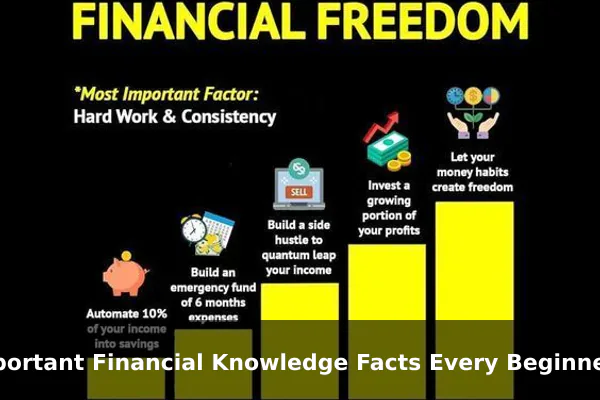
Money touches nearly every part of daily life, yet very few people are formally taught how to manage it. If you have ever felt confused by terms like interest, credit score, or emergency fund, you are not alone. The good news is that financial literacy is a learnable skill—you do not need a finance degree, advanced math, or a high income to start building a solid foundation. What matters most is understanding a handful of core ideas and applying them consistently over time.
This guide walks through the most important financial knowledge facts every beginner should know, from budgeting and saving to understanding interest, managing credit, and approaching investing with caution. Each concept is framed in plain language and anchored to trusted, unbiased official sources such as the Consumer Financial Protection Bureau (CFPB), Investor.gov from the U.S. Securities and Exchange Commission, and the Federal Deposit Insurance Corporation (FDIC). Relying on these kinds of authoritative resources is one of the best ways to protect yourself from misinformation, sales pressure, and outright scams.
Remember that small, consistent habits—tracking your spending, saving a little regularly, and learning how interest works—tend to compound into meaningful long-term stability. You do not have to master everything at once. The aim here is to give you a clear, trustworthy starting point so you can make decisions with more confidence and fewer regrets.
What Financial Literacy Really Means for Beginners
At its simplest, financial literacy is the ability to understand and use money skills effectively. That includes knowing how to manage income, control spending, save for the future, borrow responsibly, and avoid being misled. It is less about complex formulas and more about developing good judgment and steady habits.
The U.S. government’s financial education hub, MyMoney.gov, organizes money management around five core principles that work well as a beginner roadmap:
- Earn — Understand your income, including how taxes and deductions affect your take-home pay.
- Save and invest — Set aside money regularly and let it grow over time.
- Protect — Guard against fraud, theft, and unexpected emergencies.
- Spend — Make thoughtful choices and live within your means.
- Borrow — Use credit and loans wisely, understanding the true cost of debt.
You can think of these five principles as the pillars of every money decision you will ever make. When you feel unsure about a financial choice, asking which pillar it touches can help bring clarity.
Why Beginners Often Feel Overwhelmed
Many newcomers feel intimidated because financial products are surrounded by jargon and marketing. A useful mindset is to treat learning about money as a gradual process. You can start with one principle—often spending and saving—before moving on to credit and investing. Mastery comes from repetition, not from memorizing every term at once.
Build a Budget: The Foundation of Every Money Decision
A budget is simply a plan for how you will use your money. It is not about restriction or guilt; it is about giving every dollar a purpose so you are in control rather than wondering where your money went. According to CFPB guidance, building a budget starts with knowing exactly how much money comes in and how much goes out each month.
A Simple Way to Start Budgeting
You can build a basic budget in just a few steps:
- List your income. Include your salary, side income, and any regular money you receive.
- Track your expenses. Write down both fixed costs (rent, utilities, loan payments) and variable costs (groceries, entertainment, dining out).
- Compare the two. If you are spending more than you earn, look for categories you can adjust.
- Set goals. Direct any leftover money toward savings, debt repayment, or future plans.
The 50/30/20 Idea
A popular starting framework is the 50/30/20 approach, where roughly 50% of after-tax income goes to needs, 30% to wants, and 20% to savings and debt repayment. This is a general guideline rather than a rule, and the right split depends on your situation, cost of living, and goals. The value of any budgeting method is that it gives you a structure to track progress and make intentional choices, not that it guarantees a specific outcome.
The most effective budget is one you will actually use. Whether that is a spreadsheet, a notebook, or a budgeting app, consistency matters far more than the tool you choose.
Saving and Emergency Funds: Why Cushions Beat Crises
One of the most important financial knowledge facts for beginners is that unexpected expenses are not a matter of if, but when. A car repair, medical bill, or sudden loss of income can derail finances quickly if you have no cushion. This is exactly what an emergency fund is for: money set aside specifically to cover surprises without forcing you into high-interest debt.
Pay Yourself First
A powerful habit is to pay yourself first—treating savings like a required bill rather than whatever happens to be left over. Even a small, automatic transfer to savings each payday adds up over time and builds the discipline that long-term financial stability depends on. Many experts suggest gradually working toward several months of essential expenses, but the right target varies by person. The key is to start where you are, even with modest amounts.
How the FDIC Protects Your Money
Where you keep your savings matters too. The Federal Deposit Insurance Corporation (FDIC) insures deposits at member banks, which means that if an insured bank fails, your eligible deposits are protected up to the applicable coverage limits set by the FDIC. Coverage rules and limits can be specific to account types and ownership categories, so it is wise to verify current details directly through the FDIC rather than relying on general assumptions. Keeping your emergency fund in an FDIC-insured account is a common way beginners balance safety and accessibility.
Understanding Interest and Compound Growth
Interest is one of the most influential forces in personal finance, and it can work either for you or against you. Understanding it is essential before you save, borrow, or invest.
Simple vs. Compound Interest
The difference between the two is significant:
- Simple interest is calculated only on the original amount of money (the principal).
- Compound interest is calculated on the principal plus any interest already earned or owed. In other words, your interest can earn interest.
As Investor.gov explains, compound growth is one of the most powerful concepts for savers and investors because it can accelerate the growth of money over long periods. The earlier you begin and the longer your money stays invested or saved, the more compounding can potentially work in your favor.
When Interest Works Against You
The same principle applies in reverse with debt. When you carry a balance on a high-interest credit card, compound interest can cause what you owe to grow rapidly if you only make minimum payments. This is why understanding interest is just as important for borrowers as it is for savers. Be cautious of any source that promises guaranteed returns or specific rates—real-world rates change and depend on many factors, so it is best to verify current figures through official or primary sources.
Credit and Debt: Using Them Without Getting Trapped
Credit can be a useful tool when handled responsibly, but it can also become a trap when misunderstood. Building healthy credit habits early is one of the most valuable things a beginner can do.
What a Credit Score Reflects
A credit score is a number that lenders use to estimate how likely you are to repay borrowed money. While scoring models vary, common factors include your payment history, the amount of debt you carry relative to your limits, the length of your credit history, and how often you apply for new credit. According to CFPB guidance, paying bills on time and keeping balances low are among the most reliable ways to support a healthy credit profile over time.
The Real Cost of High-Interest Debt
Not all debt is equal. A mortgage or a student loan may serve a long-term purpose, while high-interest revolving debt—like an unpaid credit card balance—can quickly become expensive. To use credit and debt wisely, beginners can focus on a few habits:
- Pay more than the minimum whenever possible to reduce interest costs.
- Avoid borrowing for non-essential purchases you cannot comfortably repay.
- Read the terms, including interest rates and fees, before agreeing to any loan or card.
- Check your credit reports periodically for errors and signs of fraud.
These are general principles rather than personalized advice. Because individual circumstances differ, it can help to consult unbiased resources like the CFPB before making major borrowing decisions.
Investing Basics and Avoiding Fraud
Once you have a budget, a savings cushion, and your high-interest debt under control, investing becomes a natural next area to learn. Investing involves putting money into assets with the goal of growing it over time, but it always carries some level of risk.
Core Investing Concepts
Investor.gov and FINRA, the regulator-backed investor education sources, emphasize several foundational ideas for beginners:
- Risk and return are connected—generally, higher potential returns come with higher potential risk.
- Diversification means spreading money across different investments so that one loss has less impact on your overall portfolio.
- Fees matter because costs can quietly reduce your returns over the long run.
- Time horizon is important—money you may need soon is generally treated differently than money invested for decades.
Protecting Yourself From Fraud
Fraud awareness is a critical part of financial literacy. Be skeptical of any opportunity that promises guaranteed high returns with little or no risk, pressures you to act immediately, or discourages you from doing your own research. Before investing, you can verify whether a person or firm is properly registered using the official tools provided by regulators such as the SEC and FINRA. A trustworthy investment will withstand careful questions; a scam usually will not.
Common Beginner Money Mistakes to Avoid
Many financial setbacks come from a handful of avoidable mistakes. Recognizing them in advance can save you significant stress and money.
- Not having a budget. Without a plan, it is easy to overspend and lose track of where money goes. The fix is to start tracking income and expenses, even informally.
- Skipping an emergency fund. Relying on credit cards for surprises leads to expensive debt. Building even a small cushion provides a buffer.
- Paying only the minimum on debt. This maximizes interest costs over time. Paying more, when possible, reduces the total you owe.
- Ignoring fees. Whether on bank accounts, loans, or investments, fees can erode your money. Read the fine print and compare options.
- Chasing get-rich-quick schemes. Promises of fast, guaranteed wealth are classic warning signs of fraud. Slow, steady habits are far more reliable.
- Not verifying information. Acting on tips from social media or unverified sources can be costly. Confirm claims through official channels.
None of these mistakes are permanent. Financial habits can be adjusted at any age, and each small correction moves you toward greater stability.
Next Steps: Turning Knowledge Into Habits
Knowing these facts is only the beginning—real progress comes from turning knowledge into consistent habits. Here is a simple starter plan you can adapt to your own situation:
- Write down your income and expenses for one month to see your true financial picture.
- Set up a basic budget using a method that feels manageable to you.
- Automate a small savings transfer each payday to begin building an emergency fund.
- Review your debts and create a plan to pay down high-interest balances first.
- Learn one investing concept at a time using trusted educational sources before committing money.
- Verify any financial claim independently through official resources.
As you continue learning, lean on unbiased, authoritative hubs such as the CFPB, MyMoney.gov, Investor.gov, the FDIC, and FINRA. These organizations exist to educate and protect consumers, and they are excellent places to double-check anything you read elsewhere. Because rules, rates, and product details can change over time, it is always wise to confirm current information directly from these primary sources.
Financial literacy is a journey rather than a destination. By understanding budgeting, saving, interest, credit, and investing—and by staying alert to fraud—you give yourself a durable foundation for making confident decisions. Start small, stay consistent, and keep learning. Over time, these everyday habits can add up to lasting financial well-being.
Official references
- Consumer Financial Protection Bureau (CFPB) – U.S. federal agency providing authoritative, unbiased consumer guidance on budgeting, credit, debt, and financial products for beginners.
- MyMoney.gov (U.S. Financial Literacy and Education Commission) – Official U.S. government hub for financial education built around the five core principles (earn, save, protect, spend, borrow).
- Investor.gov (U.S. Securities and Exchange Commission) – SEC's official investor education resource covering investing basics, compound interest, and avoiding fraud.
- Federal Deposit Insurance Corporation (FDIC) Money Smart – Official FDIC financial education program explaining deposit insurance, savings, and banking fundamentals.
- Financial Industry Regulatory Authority (FINRA) Investor Education – Regulator-backed, nonprofit investor education on investment products, risk, and fees relevant to beginners.
