
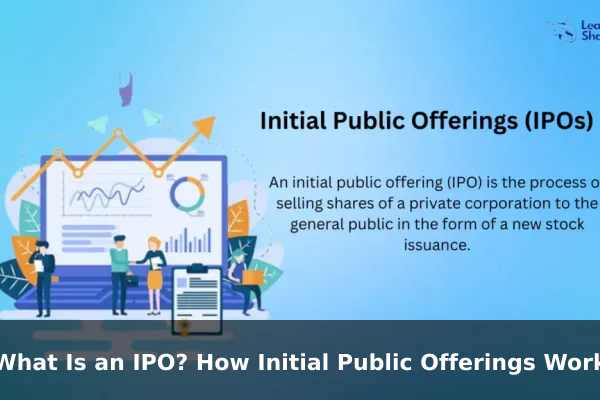
When a fast-growing private company decides it wants to raise money from the public and let everyday investors buy a stake, it usually does so through an initial public offering, or IPO. An IPO is the moment a company sells shares of itself to public investors for the first time and lists those shares on a stock exchange such as the New York Stock Exchange (NYSE) or Nasdaq. It is one of the most significant milestones in a company’s life, transforming it from a privately held business into a publicly traded one with thousands of new owners and a host of new responsibilities.
Understanding how IPOs work matters because they are one of the main ways ordinary investors gain early access to companies that may still be in a rapid growth phase. At the same time, IPOs carry distinct risks that differ from buying established, long-listed stocks. Newly public companies often have limited trading history, uncertain valuations, and price swings that can be sharp in the first weeks. In this guide, we will explain what an IPO is, why companies go public, who the key players are, how the process unfolds step by step, how shares are priced and allocated, how you can realistically participate, and what to watch out for before you invest.
This article is general financial education, not personalized investment advice. Rules, prices, and availability can change, so always confirm current details with official sources such as the U.S. Securities and Exchange Commission (SEC) and the exchange where a company lists.
What Is an IPO, Exactly?
An initial public offering is the process by which a private company offers its shares to the general public for the first time. According to the SEC’s investor education resources, an IPO is when a company first sells stock to the public, after which those shares typically trade on a national securities exchange. Before an IPO, ownership is generally limited to a relatively small group: founders, employees, early investors, venture capital firms, and other private backers. After the IPO, anyone with a brokerage account can potentially buy and sell the company’s shares on the open market.
Private vs. Public Ownership
A private company is owned by a closed circle of shareholders and is not required to disclose its detailed financial results to the general public. A public company, by contrast, has shares that trade openly and must comply with extensive ongoing disclosure and reporting requirements. Going public means accepting transparency obligations such as filing regular financial reports, but it also unlocks access to a far larger pool of capital and a liquid market for the company’s stock.
Primary Shares vs. Secondary Shares
Not all shares sold in an IPO are the same. It helps to distinguish between two types:
- Primary shares: These are newly created shares sold by the company itself. The proceeds go directly to the company, providing fresh capital it can use to grow, repay debt, or invest in operations.
- Secondary shares: These are existing shares sold by current holders, such as founders, employees, or early investors. The proceeds from these sales go to those selling shareholders rather than to the company.
Many IPOs include a mix of both. Understanding the split matters because it tells you how much money is actually flowing into the business versus how much is simply changing hands among existing owners.
Why Companies Decide to Go Public
Going public is a major strategic decision, and companies weigh several motivations against meaningful tradeoffs. Knowing the “why” can help you evaluate whether a particular IPO aligns with a healthy long-term story or is primarily an exit for early backers.
Common Reasons to Go Public
- Raising capital for growth: An IPO can raise substantial funds to finance expansion, research and development, new facilities, or international growth.
- Liquidity for early investors and employees: Founders, venture capitalists, and employees holding stock options often gain a way to eventually convert their holdings into cash through a public market.
- Acquisition currency: Publicly traded shares can be used as currency to acquire other companies, since the stock has a transparent market value.
- Brand visibility and credibility: Listing on a major exchange can raise a company’s public profile and signal a degree of scale and accountability to customers and partners.
The Tradeoffs of Going Public
Becoming a public company is not free of cost. Companies take on significant obligations and constraints, including:
- Disclosure requirements: Public companies must file detailed financial statements and disclosures on a regular schedule, which can be costly and time-consuming.
- Compliance and legal costs: Underwriting fees, legal expenses, accounting, and ongoing regulatory compliance add up.
- Loss of some control: A broader shareholder base, board scrutiny, and market pressure for short-term results can constrain management’s flexibility.
- Market scrutiny: Quarterly expectations and public stock-price reactions can influence strategic decisions.
The Key Players in an IPO
An IPO involves several parties working together, each with a distinct role. Recognizing who does what helps clarify how the deal is structured and who is accountable.
The Issuing Company
This is the business going public. Its management team and board drive the decision, prepare disclosures, and ultimately sign off on the terms of the offering.
Underwriters and Investment Banks
Underwriters are investment banks that manage the offering. They help the company prepare filings, gauge investor demand, set the price, and distribute shares. The lead underwriter, often called the book-running manager, coordinates the syndicate of banks involved and plays a central role in building the order book and pricing the deal.
The SEC as Regulator
In the United States, the SEC oversees the registration and disclosure process. Under the framework established by the Securities Act of 1933, a company must file a registration statement and provide a prospectus so that investors have access to material information before they invest. The SEC reviews these filings for completeness and compliance, though it does not endorse or guarantee the investment.
FINRA
The Financial Industry Regulatory Authority (FINRA) is a self-regulatory organization that oversees broker-dealers. Among other things, FINRA provides investor guidance on new issues and enforces rules around how IPO shares are underwritten and allocated, helping promote fairness in the distribution of new offerings.
The Stock Exchange
Finally, the company chooses an exchange, such as the NYSE or Nasdaq, where its shares will be listed and traded. The exchange sets listing standards the company must meet and provides the marketplace where the stock trades once public.
How the IPO Process Works, Step by Step
The path from private company to publicly traded stock typically unfolds over many months. While timelines and details vary, the general lifecycle follows a recognizable sequence.
- Selecting underwriters: The company chooses one or more investment banks to lead the offering, often after a competitive process sometimes called a “bake-off.”
- Due diligence and preparation: The underwriters, lawyers, and accountants conduct thorough due diligence on the company’s financials, operations, and risks.
- Filing the registration statement: The company files a registration statement, commonly the Form S-1, with the SEC. This document includes the prospectus, which discloses the business model, financials, risk factors, and intended use of proceeds.
- SEC review and the quiet period: The SEC reviews the filing and may request revisions. During this quiet period, the company faces restrictions on what it can publicly say to avoid hyping the offering.
- The roadshow: Management and underwriters present the investment story to institutional investors to gauge demand and gather indications of interest.
- Pricing the offering: Based on demand, the company and underwriters set the final offer price and the number of shares, usually the night before trading begins.
- First day of trading: The shares begin trading on the chosen exchange, and the public market sets the price from that point forward.
Because each step is governed by regulatory requirements, prospective investors should rely on the official prospectus and SEC filings rather than informal marketing. These documents are designed to give you the material facts you need to make an informed decision.
How IPO Shares Are Priced and Allocated
One of the most misunderstood parts of an IPO is how the price is set and who actually gets to buy shares at that price.
Book-Building and Setting the Offer Price
Underwriters typically use a process called book-building, in which they collect indications of interest from institutional investors during the roadshow. By assessing how many shares investors want and at what price, the underwriters and company arrive at a final offer price. This is the price at which the shares are initially sold to those who receive an allocation.
Offer Price vs. Opening Trading Price
It is important to distinguish the offer price from the price you may see when the stock starts trading. The offer price is set before the market opens and goes to allocated buyers. The opening trading price is determined by supply and demand on the exchange once trading begins, and it can be significantly higher or lower than the offer price. A large gap between the two, sometimes called an IPO “pop,” benefits those who received shares at the offer price but can mean later buyers pay a premium.
How Shares Are Allocated
Allocation of IPO shares often favors institutional investors and select clients of the underwriting banks. FINRA’s rules address fairness in how new issues are distributed and place certain restrictions on allocations to prevent abuses. For most retail investors, getting shares at the offer price can be difficult, which is why understanding allocation realities is essential before assuming you can buy in at the initial price.
How Everyday Investors Can Participate
Even though offer-price allocations often go to institutions, retail investors still have realistic ways to gain exposure to IPOs. Keep in mind these are general options, not recommendations.
- Brokerage IPO-access programs: Some brokerages offer eligible retail clients the chance to request shares at the offer price for certain IPOs. Availability and eligibility requirements vary by broker and deal.
- Buying on the open market: The most common route for everyday investors is simply buying shares on the exchange after the stock begins trading. This avoids allocation hurdles but means you pay the market price, which may already reflect a first-day move.
- IPO-focused funds: Certain mutual funds and exchange-traded funds focus on recently public companies, offering diversified exposure without picking individual IPOs.
Whatever route you consider, remember that retail access at the offer price is often limited, and buying a newly public stock can be more volatile than buying an established one. This is general information, not investment advice; consider your own goals and risk tolerance and consult the prospectus.
IPO Alternatives: Direct Listings and SPACs
A traditional IPO is not the only way for a company to go public. Two notable alternatives have grown in prominence, and understanding them helps put IPOs in context.
Direct Listings
In a direct listing, a company lists its existing shares on an exchange without the traditional underwritten offering of new shares. There is typically no new capital raised in a classic direct listing, and existing shareholders can sell directly to the public. This approach can reduce some underwriting costs but lacks the price-stabilization support an underwriter may provide.
SPAC Mergers
A special purpose acquisition company (SPAC) is a shell company that raises money through its own IPO and then seeks to merge with a private company, effectively taking that company public. SPAC mergers can offer a faster path to public markets, but they carry their own risks around valuation, dilution, and the quality of the target, so they warrant careful scrutiny.
Risks and Considerations Before Buying an IPO
IPOs can be exciting, but they come with risks that differ from buying seasoned stocks. Approaching them with caution and doing your homework is essential.
Key Risks to Understand
- Volatility: Newly public shares can swing sharply in their first days and weeks as the market discovers a price.
- Lock-up period expiration: Insiders are often restricted from selling for a set period after the IPO. When this lock-up expires, a wave of new selling can pressure the price.
- Limited operating history: Some companies go public while still young or unprofitable, leaving investors with less data to judge long-term prospects.
- Valuation uncertainty: Without a long trading record, it can be hard to know whether the offer price represents fair value.
- Information asymmetry: Insiders and large institutions may have a clearer picture than retail investors, even with mandatory disclosures.
Do Your Due Diligence
The single most important step is to read the prospectus carefully, paying close attention to the risk factors, financial statements, and the company’s stated use of proceeds. Cross-check claims against official filings on the SEC’s system and review the listing exchange’s information. Be cautious about hype, and remember that strong demand or a big first-day pop does not guarantee long-term performance.
Frequently Asked Questions
What does IPO stand for?
IPO stands for initial public offering — the first time a private company sells its shares to the public and lists them on a stock exchange.
How long does the IPO process take?
It varies widely, but preparing for an IPO often takes several months to more than a year, depending on the company’s readiness, market conditions, and the SEC review process.
Can I lose money on an IPO?
Yes. IPO shares can fall below the offer or opening price, sometimes substantially. There are no guarantees, and newly public stocks can be especially volatile.
What is a lock-up period?
A lock-up period is a window after the IPO during which insiders are generally restricted from selling their shares. Its expiration can increase the supply of shares and affect the price.
What is an underwriter?
An underwriter is an investment bank that helps manage the IPO, including preparing filings, gauging demand, setting the price, and distributing shares to investors.
Conclusion
An IPO marks a company’s transition from private ownership to the public markets, opening the door for everyday investors to buy in while giving the company access to a large pool of capital. The process is carefully governed: companies file registration statements with the SEC under the Securities Act of 1933, work with underwriters to price and allocate shares, and list on exchanges like the NYSE or Nasdaq, with FINRA helping oversee fairness in how new issues are distributed.
For investors, the key takeaways are to understand the mechanics, recognize that offer-price allocations often favor institutions, and approach newly public stocks with a clear view of the risks — volatility, lock-up expirations, limited history, and valuation uncertainty. Reading the prospectus and relying on official sources are the best ways to make informed decisions. IPOs can be a compelling way to participate in a company’s growth, but like any investment, they reward patience, research, and a healthy respect for risk. This article is educational and not investment advice; always verify current rules and details with the SEC, FINRA, and the relevant exchange.
Official references
- U.S. Securities and Exchange Commission (SEC) – Investor.gov – Primary U.S. regulator's official investor education resource defining IPOs and the registration/disclosure process.
- U.S. Securities and Exchange Commission (SEC) – Authoritative source on the Securities Act of 1933, S-1 registration statements, and prospectus requirements governing IPOs.
- Nasdaq – Going Public / IPO – Official exchange page covering the listing process and live IPO calendar from a primary U.S. stock exchange.
- New York Stock Exchange (NYSE) – IPO – Official exchange resource on how companies list and go public via an IPO.
- Financial Industry Regulatory Authority (FINRA) – Self-regulatory organization providing investor guidance on new issues, underwriting, and IPO allocation rules.
