
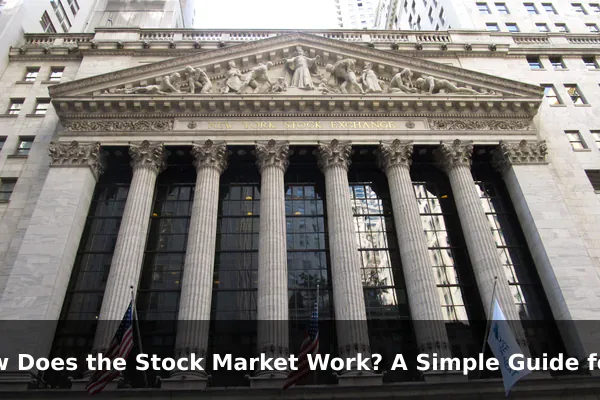
If you have ever watched the news and seen headlines about the market “surging” or “tumbling,” you may have wondered what is actually happening behind those numbers. The stock market is mentioned almost every day, yet most beginners rarely understand what is truly taking place when a stock is bought or sold. The good news is that the basic ideas are far simpler than the jargon makes them sound.
This guide breaks the stock market down into its core moving parts so the entire process feels logical rather than intimidating. Instead of memorizing complicated terms, you will learn how the pieces fit together: what a stock is, how companies sell shares to the public, how a single trade travels from your phone to an exchange, and what makes prices move. Wherever possible, the explanations here align with the educational materials published by official regulators and exchanges such as the U.S. Securities and Exchange Commission (SEC), the Financial Industry Regulatory Authority (FINRA), the New York Stock Exchange (NYSE), and Nasdaq.
Understanding these basics first is one of the most valuable steps a new investor can take. A clear mental model helps you avoid common mistakes, ask better questions, and make more informed decisions with your money. Let’s start at the very beginning.
What Is the Stock Market, Really?
The stock market is not a single building or a single place. It is a network of exchanges and marketplaces where shares of publicly traded companies are bought and sold. When people say “the market went up today,” they are usually referring to the combined movement of many stocks tracked by an index. The market itself is simply the system that connects buyers and sellers so that ownership in companies can change hands in an orderly, transparent way.
Stock vs. Share vs. the Market
These three terms are closely related but not identical, and mixing them up is one of the first sources of confusion for beginners:
- Stock is the general concept of ownership in a company. If you own stock in a business, you own a piece of it.
- Share is a single, countable unit of that stock. Saying “I bought 10 shares” is more precise than saying “I bought some stock.”
- The market is the broader environment where all of these shares are traded across many companies and exchanges.
What It Means to Own a Stock
When you buy a share, you become a partial owner of that company, even if your slice is tiny. As a shareholder, you may be entitled to certain benefits, which can include:
- A potential rise in the value of your shares if the company grows and demand for its stock increases.
- Dividends, which are portions of profit that some companies choose to distribute to shareholders.
- Voting rights on certain company matters, depending on the type of shares you hold.
It is important to be realistic: owning stock also means sharing in the company’s risks. Share prices can fall as well as rise, and no return is guaranteed. Ownership is a real claim on a business, not a lottery ticket, which is why understanding the underlying company matters.
How Companies Get Listed: The Role of the IPO
Before a stock can be traded by the general public, the company has to make its shares available in the first place. This is where the difference between the primary market and the secondary market becomes important.
The Primary Market and the IPO
When a private company wants to raise money from the public, it can sell shares for the first time through an Initial Public Offering (IPO). This takes place in the primary market, where the company itself issues new shares and receives the proceeds directly. In simple terms, the IPO is the moment a company “goes public.”
An IPO generally involves several steps, which can include:
- The company works with investment banks to prepare and price the offering.
- It files required disclosure documents with regulators so investors can review key information.
- Shares are offered to investors, and the company raises capital to fund growth, pay down debt, or support operations.
- The stock then begins trading on an exchange such as the NYSE or Nasdaq.
The Secondary Market: Where Most Trading Happens
After the IPO, the shares move into the secondary market. This is where the vast majority of everyday trading occurs. When you buy a share through your brokerage app, you are almost always buying it from another investor, not from the company itself. The company does not receive money from these later trades; ownership is simply transferring from one investor to another at a price both sides accept.
This distinction matters because it explains why a company’s stock price can move dramatically without the business directly gaining or losing cash in that moment. The secondary market reflects what investors are currently willing to pay for ownership.
How a Stock Trade Actually Happens
One of the most demystifying things a beginner can learn is what physically happens when you tap “buy.” The process feels instant, but several participants are working together behind the scenes within a fraction of a second.
From Investor to Broker to Exchange
A typical trade follows a clear path:
- You place an order through a brokerage account, specifying the stock and the number of shares.
- Your broker routes the order to a marketplace or exchange where the stock trades.
- The exchange matches your order with a corresponding seller (if you are buying) or buyer (if you are selling).
- The trade is executed, and the price is recorded and reported.
- The trade settles, meaning the shares and money officially change hands over the following business days according to standard settlement rules.
Bid, Ask, and the Spread
Prices on an exchange are set by a continuous negotiation between buyers and sellers. Two numbers are central to this:
- The bid is the highest price a buyer is currently willing to pay.
- The ask (or offer) is the lowest price a seller is currently willing to accept.
The gap between them is called the spread. A trade happens when a buyer and seller agree on a price, often somewhere within that range. Highly traded stocks tend to have very small spreads because there are so many participants, while less-traded stocks can have wider spreads.
Market Orders vs. Limit Orders
Beginners typically encounter two basic order types:
- A market order tells your broker to buy or sell immediately at the best available current price. It prioritizes speed over price control.
- A limit order sets a specific price you are willing to accept. It prioritizes price control over speed, and it may not execute if the market never reaches your price.
Exchanges like the NYSE and Nasdaq operate sophisticated electronic systems that match millions of these orders every day, helping ensure trading is fast, orderly, and transparent.
What Makes Stock Prices Go Up and Down
Perhaps the most common question beginners ask is, “Why did the price change?” The honest answer is that prices reflect the constantly shifting balance of supply and demand, which is influenced by many factors at once. It is important to approach this topic with humility: no one can reliably predict short-term price movements.
Supply and Demand as the Core Driver
At its simplest, when more investors want to buy a stock than sell it, the price tends to rise. When more want to sell than buy, the price tends to fall. Every other factor ultimately works by changing how many people want to buy or sell at a given moment.
Factors That Influence Demand
Many forces can shift investor interest, including:
- Company earnings and performance. Strong profits and growth can attract buyers, while disappointing results can prompt selling.
- Economic news. Interest rates, inflation, and employment data can change how investors view the broader environment.
- Industry trends. Developments affecting an entire sector can lift or weigh on related companies.
- Investor sentiment. Emotions like optimism and fear can move prices in the short term, sometimes more than fundamentals do.
- Company-specific news. Leadership changes, new products, lawsuits, or regulatory decisions can all play a role.
Because so many variables interact, prices can be volatile, meaning they move up and down, sometimes sharply. This is normal market behavior, not necessarily a sign that something is wrong. Treating short-term swings as predictable is one of the riskiest assumptions a new investor can make.
Who Are the Key Players in the Market?
The market works because of the combined activity of many different participants, each playing a distinct role. Understanding who they are makes the system feel far less mysterious.
Investors and Traders
- Retail investors are individuals investing their own money, often through everyday brokerage apps and retirement accounts.
- Institutional investors are large organizations such as mutual funds, pension funds, and insurance companies that invest substantial sums on behalf of many people.
The Intermediaries
- Brokers connect investors to the market by routing and executing orders. In the United States, broker-dealers are overseen by FINRA.
- Market makers stand ready to buy and sell certain stocks, helping ensure there is almost always someone on the other side of a trade. This activity supports liquidity, the ease with which shares can be bought or sold.
- Exchanges such as the NYSE and Nasdaq provide the regulated venues and technology where trading takes place.
Why Liquidity and Price Discovery Matter
Two concepts tie these players together. Liquidity means you can usually buy or sell quickly without dramatically moving the price. Price discovery is the ongoing process by which the constant flow of buy and sell orders settles on a current market price. Together, they help the market function smoothly and fairly for everyone involved.
How the Market Is Regulated and Your Money Protected
A working market depends on trust, and trust depends on oversight. In the United States, several organizations work to keep markets fair, transparent, and reasonably protected against fraud.
The Role of the SEC and FINRA
The U.S. Securities and Exchange Commission (SEC) is the primary federal regulator of securities markets. Its responsibilities include enforcing securities laws, requiring companies to disclose important information, and working to protect investors. The SEC also runs Investor.gov, a free educational resource designed to help beginners understand how investing works.
The Financial Industry Regulatory Authority (FINRA) is a self-regulatory organization that oversees broker-dealers operating in the U.S. It sets rules of conduct, monitors trading, and provides trusted educational materials for the public.
What Regulation Does and Does Not Do
It is essential to understand the limits of these protections:
- Regulation and oversight aim to guard against fraud, manipulation, and misconduct, and to promote fair disclosure.
- Regulation does not protect you from investment losses. If a company you invest in performs poorly and the stock falls, that loss is a normal market risk, not a failure of regulation.
In other words, the rules are designed to keep the game fair, but they do not guarantee that you will win. Always verify the registration of brokers and review official disclosures, because rules, fees, and requirements can change over time.
How Beginners Can Start Investing Safely
Once the mechanics make sense, the next step is approaching the market thoughtfully. There is no single “correct” way to invest, but several cautious principles are widely encouraged by educational resources.
Practical First Steps
- Build a foundation first. Many experts suggest having an emergency fund and manageable debt before investing money you might need soon.
- Open a brokerage account. Choose a registered broker and review its fees, features, and protections.
- Start small. You do not need a large sum to begin learning. Starting modestly lets you gain experience with less pressure.
- Learn about diversification. Spreading money across different investments can help reduce the impact of any single one performing poorly.
- Understand your risk tolerance. Consider how you would feel if your investments dropped in value temporarily, and invest accordingly.
Use Trusted Educational Resources
Before committing money, take advantage of free, authoritative materials. Official sources such as Investor.gov from the SEC and the educational sections of FINRA are designed specifically for beginners and are not trying to sell you anything. Relying on these can help you separate solid information from hype.
Common Beginner Mistakes to Avoid
Knowing the typical pitfalls in advance can save new investors a great deal of stress. None of these are guarantees of failure, but each is a pattern worth recognizing.
Mistakes Rooted in Emotion
- Chasing hype. Buying a stock simply because it is trending or because others seem excited can lead to overpaying.
- Trying to time the market. Attempting to perfectly buy at the bottom and sell at the top is extremely difficult, even for professionals.
- Panic selling. Selling in fear during a temporary downturn can lock in losses that might otherwise have recovered, though recovery is never guaranteed.
Mistakes Rooted in Planning
- Ignoring fees. Trading costs and account fees can quietly erode returns over time, so it pays to understand them.
- Investing without an emergency fund. Being forced to sell at a bad time because you need cash undermines a long-term strategy.
- Failing to diversify. Putting everything into a single stock concentrates your risk.
- Skipping research. Investing in something you do not understand makes it harder to react sensibly when prices move.
Viewing these as guidance rather than rules, and adjusting them to your own situation, helps build healthier long-term habits.
Conclusion
The stock market can seem overwhelming from the outside, but at its heart it is a well-organized system for connecting people who want to own pieces of companies with people who want to sell them. Companies raise money through IPOs in the primary market, investors then trade those shares in the secondary market, and exchanges, brokers, and market makers keep everything flowing. Prices move because supply and demand are constantly shifting in response to earnings, news, and sentiment.
Just as importantly, the market is supported by regulators like the SEC and FINRA, whose oversight aims to keep things fair, even though no rule can protect you from ordinary investment losses. For beginners, the smartest approach is to start with education, begin small, diversify, understand your own risk tolerance, and lean on trusted official resources such as Investor.gov before committing real money.
You do not need to predict the market to participate in it wisely. By understanding how the pieces fit together, you can replace anxiety with informed confidence and make decisions that fit your own goals. With a solid grasp of the fundamentals, you are far better equipped to take your first steps as a thoughtful, patient investor.
Official references
- U.S. Securities and Exchange Commission (SEC) – Investor.gov – Official SEC investor education resource explaining how the stock market, securities, and investing work for beginners.
- U.S. Securities and Exchange Commission (SEC) – Primary U.S. regulator of securities markets; authoritative source on market structure, regulations, and investor protections.
- Financial Industry Regulatory Authority (FINRA) – Self-regulatory organization overseeing U.S. broker-dealers; provides trusted educational material on how markets and trading work.
- New York Stock Exchange (NYSE) – Official site of a major stock exchange; primary source on listing, trading mechanics, and exchange operations.
- Nasdaq – Official site of a major stock exchange; authoritative reference on electronic trading and market data.
