
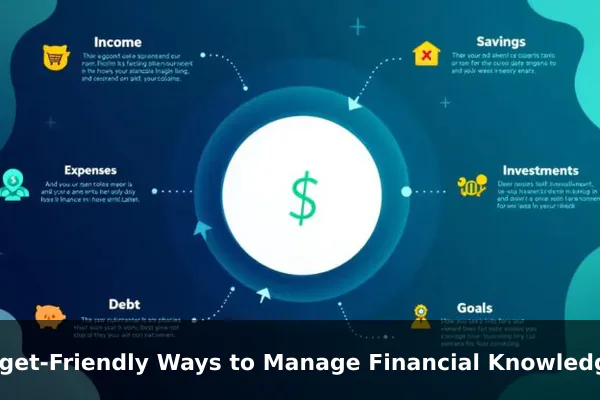
Learning how money works has never been more accessible, yet many people still assume that quality financial knowledge must come with a price tag. Expensive online courses, premium newsletters, and paid advisors all promise clarity, but they are not the only path to becoming genuinely informed. In reality, some of the most accurate and trustworthy financial education available today is published for free by government agencies and financial regulators whose mission is consumer protection rather than profit.
The genuine challenge is rarely access. It is filtering credible information from marketing noise, organizing what you learn so it stays useful, and keeping that knowledge current as rules and conditions change. When you treat financial learning as a system rather than a one-time purchase, you can build a foundation that rivals paid programs while spending little or nothing.
This guide outlines low-cost, repeatable methods to learn, verify, and maintain financial knowledge without sacrificing accuracy. You will see how to define quality on your own terms, where to find authoritative free sources, how to organize what you gather, and how to protect yourself from budget traps that quietly erode the value of what you know.
What “Quality” Really Means for Financial Knowledge
Before you can manage financial knowledge affordably, it helps to define what makes that knowledge valuable in the first place. Price is a poor proxy for quality. A free guide from a federal regulator can be far more reliable than an expensive course built around selling a particular product. When evaluating any financial information, focus on three pillars that determine whether it is worth your trust and your time.
Accuracy and Source Credibility
Accuracy means the information reflects current rules, realistic expectations, and verifiable facts. Credibility refers to who is behind the material and what incentives they have. Independent regulators and government education portals generally have no product to sell, which reduces the conflict of interest that can distort commercial advice. As a practical rule, weigh information more heavily when it comes from a primary or official source and treat anonymous or sales-driven content with healthy skepticism.
Relevance to Your Situation
Even accurate information can be low quality for you if it does not match your circumstances. Guidance written for a different country, tax system, or life stage may mislead more than it helps. Quality financial knowledge is contextual: it applies to your income, goals, obligations, and risk tolerance. Part of managing knowledge on a budget is learning to discard material that is technically correct but irrelevant to your reality.
Why Low Cost and High Quality Coexist
Many people assume that anything free must be inferior, but in financial education the opposite is often true. Public agencies fund educational resources specifically because misinformation harms consumers and markets. That mission produces material that is reviewed, neutral, and frequently updated. The signs of unreliable content tend to be consistent regardless of price:
- Promises of guaranteed returns or “secret” strategies that supposedly beat the market.
- Urgency and pressure to act immediately before “the opportunity disappears.”
- Advice that conveniently points you toward a single product the author profits from.
- No author, no date, and no references to verifiable sources.
Once you can recognize these warning signs, you can confidently lean on free, well-sourced material instead of assuming you must pay for trustworthiness.
Free, Authoritative Sources to Build Your Foundation
A strong foundation begins with a small set of dependable, no-cost references. Rather than scattering your attention across countless blogs, anchor your learning to official resources designed for the public. The following organizations publish free financial education in plain language, and each tends to be best suited for particular needs. Keep in mind that tools, rules, and links can change over time, so always check the current version of any resource.
Government and Regulator Resources Worth Bookmarking
- Consumer Financial Protection Bureau (CFPB) at consumerfinance.gov offers free budgeting tools, plain-language explanations of financial products, and consumer guidance on managing money and debt.
- MyMoney.gov, maintained by the U.S. Financial Literacy and Education Commission, is a central portal for budgeting, saving, and money management fundamentals.
- Investor.gov from the U.S. Securities and Exchange Commission provides authoritative investor education and helps you avoid common financial harm.
- Federal Trade Commission Consumer Advice at consumer.ftc.gov focuses on managing debt and protecting your finances from scams and costly mistakes.
- FDIC Money Smart is a free financial education curriculum that walks beginners through core money skills at no cost.
How to Use Each Source Effectively
Different sources shine in different situations. When you need to understand a specific product such as a loan or credit card, a consumer protection regulator is often the clearest place to start. When you want a structured curriculum to follow from the beginning, a free program built for that purpose gives you a logical sequence. When you are evaluating an investment opportunity or want to confirm whether a firm is legitimate, an investor education portal is the appropriate anchor. Matching the source to the question prevents wasted time and reduces the risk of acting on advice that does not fit.
A Low-Cost System for Organizing What You Learn
Gathering good information is only half the job. Without a system, valuable insights get lost, duplicated, or forgotten exactly when you need them. The good news is that effective organization rarely requires paid software. A few simple, free tools, used consistently, will keep your knowledge findable for years.
Capture Notes in One Reliable Place
Choose a single free note-taking app or a plain document as your home base and resist the urge to spread notes across many platforms. The specific tool matters less than the discipline of always saving to the same place. For each topic you study, jot down the key takeaway in your own words, the source it came from, and the date you recorded it. Writing in your own words forces understanding and makes the note far more useful than a copied paragraph.
Structure With Folders and a Personal Source List
Create a small number of broad folders or tags that mirror how you actually think about money, such as budgeting, saving, debt, and investing basics. Avoid over-engineering the structure; too many categories become as confusing as none at all. Alongside your notes, maintain a simple personal source list, a single document where you record the trustworthy references you rely on. This list becomes your curated library and saves you from rediscovering the same reliable sources repeatedly.
Use a Simple Spreadsheet for Anything Numeric
Free spreadsheet tools are powerful for tracking the practical side of financial knowledge. You can build a basic budget, log questions you want to research, or maintain a running list of claims you still need to verify. A spreadsheet also lets you revisit and update figures over time without rewriting everything. Keep formulas minimal and labels clear so the document stays approachable months later.
- Decide on your single home for notes and your single source list.
- Create three to five broad categories rather than many narrow ones.
- Record source and date with every note you save.
- Review your structure occasionally and merge anything redundant.
Verifying Information Before You Trust It
Even free, well-intended content can be outdated or incomplete, and the internet is full of confident advice that does not hold up. Verification is the habit that protects the quality of everything you learn. It costs nothing but a few minutes and dramatically reduces the chance of acting on bad information.
Cross-Check Against Primary Sources
When you encounter a specific claim about a rule, a fee structure, or how a financial product works, trace it back to a primary or official source before relying on it. Secondary summaries can oversimplify or misstate details. If a claim cannot be confirmed anywhere authoritative, treat it as unverified rather than fact. This single habit separates careful learners from those who repeat misinformation.
Check Dates and Watch for Drift
Financial information has a shelf life. Tax thresholds, interest rate environments, contribution limits, and program details change, sometimes annually. Always look for a publication or last-updated date, and be cautious with undated material. A guide that was accurate several years ago may now be misleading. When in doubt, confirm the current figures directly from the relevant official resource rather than assuming an old article still applies.
Be Skeptical of Sales-Driven Advice
Apply extra scrutiny whenever advice is attached to a product the author benefits from selling. The recommendation may still be sound, but the incentive deserves attention. Use a short mental checklist whenever you evaluate a claim:
- Who benefits if I follow this advice, and do they profit from my decision?
- Is it verifiable against an official or primary source?
- How current is the information, and could the rules have changed?
- Does it promise certainty or speed in a way that sounds too good to be true?
Keeping Knowledge Current Without Ongoing Costs
Financial knowledge is not a one-time achievement; it requires light, ongoing maintenance. Fortunately, staying current does not require paid subscriptions. With a few free habits, you can keep your understanding fresh and retire material that no longer applies.
Subscribe to Free Official Updates
Many government agencies and regulators offer free email updates, alerts, and newsletters. Because these come directly from the source, they are an efficient, trustworthy way to learn about new tools, rule changes, and consumer warnings without hunting for them. Limit yourself to a small number of high-signal subscriptions so your inbox does not become another form of noise.
Schedule Periodic Reviews
Set a recurring reminder to review your notes and personal source list, perhaps once a quarter. During each review, confirm that the figures you rely on are still accurate, update anything that has changed, and verify that your saved links still work. This small routine prevents the slow accumulation of outdated information that quietly degrades the quality of your knowledge base.
Retire Outdated Notes Deliberately
Old notes are not just clutter; they can be actively misleading if you forget they are out of date. When you find information that no longer applies, either update it with the current details or mark it clearly as historical. Deliberately retiring stale material is just as important as adding new information, and it keeps your system trustworthy.
Common Budget Traps That Quietly Lower Quality
Trying to save money can paradoxically lead to lower-quality knowledge if you fall into certain traps. Being aware of them lets you protect both your wallet and the integrity of what you learn.
Paid “Guru” Content and Hidden Costs
The financial education space is crowded with self-styled experts selling courses, memberships, and “systems.” Some offer genuine value, but many repackage freely available information at a premium or steer you toward products that earn them commissions. Before paying for anything, ask whether the same material is available for free from an authoritative source. Often it is. The safeguard here is simple: exhaust free, credible resources first, and only pay when a course offers clearly superior structure or depth you cannot find elsewhere.
Outdated Free Material and Information Overload
Free does not automatically mean current. Old articles, abandoned blogs, and forum threads can persist for years with no updates. At the same time, consuming too much information from too many places leads to overload, where you accumulate notes faster than you can verify or apply them. Both problems lower quality. The fix is restraint: rely on a focused set of trustworthy sources, verify before saving, and prioritize understanding over collecting.
Scams Disguised as Education
Some “educational” content is a front for scams, designed to build trust before pitching a fraudulent opportunity. Be especially wary of unsolicited offers, pressure to act fast, and anything promising guaranteed profits. Consumer protection agencies regularly publish warnings about current schemes, and consulting those resources is a free, effective defense. When something feels off, slow down and verify before committing money or personal information.
A Simple Weekly and Monthly Routine to Put It Together
Knowing the principles is useful only if you turn them into a sustainable habit. The goal is a light, repeatable routine that fits into a busy life and costs nothing. The following time-boxed approach combines everything above into a practical rhythm you can maintain indefinitely.
A Weekly Rhythm (About 30 Minutes)
- Learn one thing: Spend roughly fifteen minutes reading a single topic from one of your trusted free sources.
- Capture it: Write a short note in your own words, including the source and date.
- Verify if needed: If the topic involves a specific rule or number, take a few minutes to confirm it against a primary source before saving it as fact.
A Monthly Rhythm (About One Hour)
- Review and tidy: Skim your notes, merge duplicates, and clarify anything confusing.
- Update figures: Check that any numbers, rates, or rules you rely on are still current.
- Retire the stale: Archive or correct outdated notes so they cannot mislead you later.
- Refresh your source list: Add any new trustworthy references and remove links that no longer work.
This routine keeps your knowledge active and accurate without ongoing expense. Because it is small and predictable, it is far more sustainable than occasional bursts of intense study followed by long neglect.
Conclusion
Managing financial knowledge on a budget is not about settling for less; it is about being deliberate. When you define quality by accuracy, credibility, and relevance rather than price, you free yourself to rely on the excellent free resources that regulators and government agencies already provide. The combination of trustworthy sources, a simple organizing system, consistent verification, and light ongoing maintenance produces knowledge that is both affordable and genuinely high quality.
Start small. Choose one reliable source, set up a single place for your notes, and adopt the weekly and monthly routine. Avoid the budget traps that quietly erode quality, and remember that rules, rates, and tools change over time, so confirm important details against current official information before you act. With these habits, you can build and maintain financial knowledge you can trust, without ever sacrificing quality to stay within budget.
Official references
- Consumer Financial Protection Bureau (CFPB) – U.S. federal regulator providing free, unbiased budgeting tools, financial education resources, and consumer guidance on managing money.
- MyMoney.gov (U.S. Financial Literacy and Education Commission) – Official U.S. government portal for financial education covering budgeting, saving, and money management fundamentals.
- Investor.gov (U.S. Securities and Exchange Commission) – SEC's official investor education site offering free, authoritative resources on saving, budgeting, and avoiding financial harm.
- Federal Trade Commission Consumer Advice – Official FTC guidance on budgeting, managing debt, and protecting personal finances from scams and costly mistakes.
- FDIC Money Smart Program – Free financial education curriculum from the FDIC, a primary source for low-cost approaches to building financial knowledge.
